1. Introduction: The Evolution of Commercial Furniture Procurement
The landscape of B2B furniture manufacturing is undergoing a massive shift in 2026. For years, procurement managers relied heavily on generic aggregator directories like Alibaba to source office chair parts. However, as global supply chain compliance tightens and commercial clients demand stricter safety standards, the “lowest price wins” model is dead.
Today’s premium furniture brands and assembly facilities require more than just a factory; they need a strategic OEM supply chain integrator. Sourcing the best office chair accessories supplier now means finding a partner capable of bridging the gap between heavy-duty raw manufacturing and global export compliance, ensuring every gas lift and swivel base meets rigorous ANSI/BIFMA standards before it ever reaches a shipping container.
2. Five Critical Benchmarks for Vetting a Chair Components Partner
When auditing a new office chair hardware wholesale supplier, look beyond the initial catalog. Use these five benchmarks to separate professional integrators from unreliable middlemen:
- Engineering & R&D Support: Your supplier should efficiently provide comprehensive technical datasheets and CAD drawings for your engineering team to review.
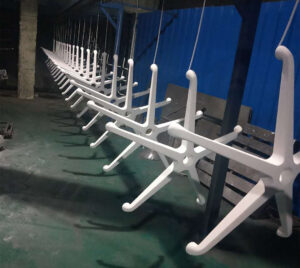
- Specialized Manufacturing Hubs: The best suppliers utilize a network of specialized facilities (e.g., partnering with dedicated OEM casting factories) rather than attempting to manufacture every component under one roof.
- In-House Batch Testing: Third-party certificates are a baseline, but top-tier suppliers perform rigorous in-house fatigue and static load testing on every single order batch prior to shipment.
- Scalable Logistics: A reliable partner seamlessly handles complex shipping terms, offering tiered volume pricing and clear FOB or CIF logistics to major global ports.
- Transparent Communication: Avoid suppliers who filter information through slow, non-technical intermediaries. Direct access to bilingual business development managers ensures specifications are never lost in translation.
3. Technical Specifications Detailed Breakdown: Sourcing Core Office Chair Parts
To capture high-end contract furniture projects, your internal engineering specifications must match global commercial standards. Here is what to look for when sourcing core components:
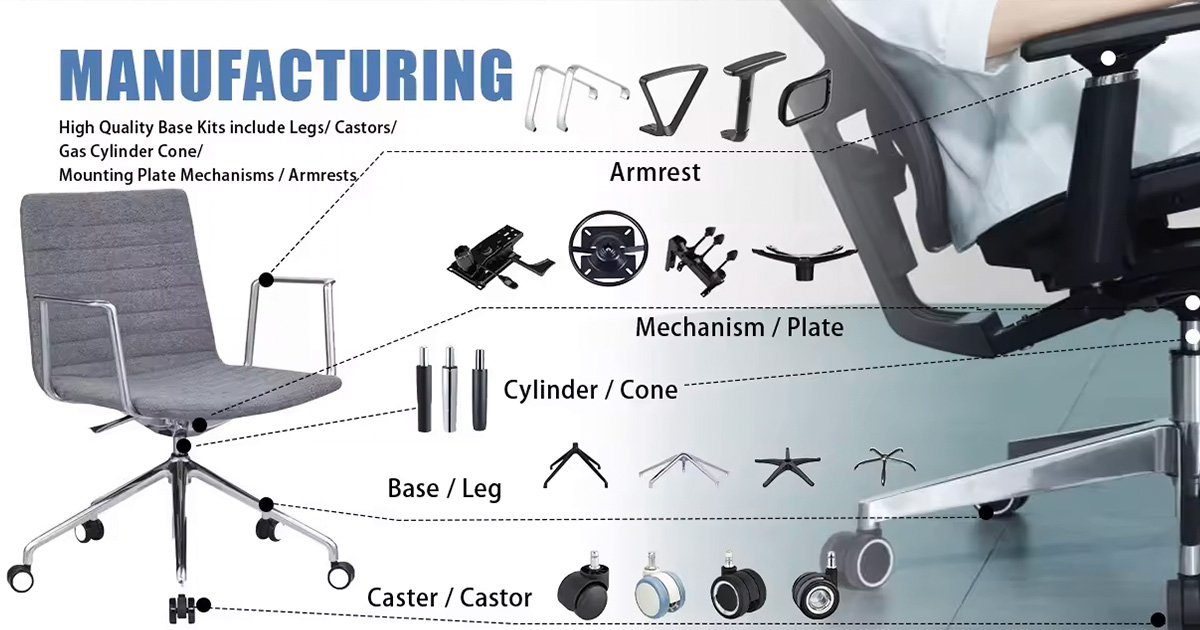
Heavy-Duty Gas Cylinders Do not compromise on pneumatics. For heavy-duty commercial applications, specify Class 4 pneumatic cylinders. These must feature a 2.5mm steel wall thickness, a standard 46.5mm bottom diameter, and a durable QPQ finish. Understanding when to deploy standard rotating cylinders versus non-rotating variants is critical for specialized medical or industrial seating.
5-Star Swivel Bases: Nylon vs. Aluminum Material science dictates product lifespan and target market placement.
- Technical Nylon: For high-traffic, heavy-duty contract environments, PA66 + Fiberglass (GF) reinforced technical nylon (typically in 280mm / 560mm sizes) provides exceptional tensile strength, impact resistance, and cost-effective shipping weights.
- Die-Cast Aluminum: For executive, lounge, and premium ergonomic seating, sourcing Die-Cast Aluminum alloy bases (e.g., ADC12) is non-negotiable. High-grade aluminum bases deliver superior structural rigidity and elegant surface treatments (such as high-polish or matte powder coating). A premium supplier ensures these metal bases can effortlessly withstand BIFMA’s grueling 2500 lbs (1136 kg) static load crush tests without deformation.
Tilt Mechanisms & Mounting Plates The mechanism is the mechanical heart of any ergonomic chair. Rather than focusing solely on basic pneumatic levers, modern B2B procurement demands advanced ergonomic functionality and structural integrity.
When sourcing this central control unit, B2B procurement managers must prioritize engineering precision over basic functionality. Because the mechanism absorbs the most dynamic stress during daily use, a poorly manufactured plate quickly leads to seat wobble and mechanical failure. Premium suppliers ensure structural integrity by utilizing heavy-gauge cold-rolled steel.
To understand the importance of this specification, consider that standard, low-cost mechanisms often rely on a steel thickness of just 1.5mm to 2.0mm. Under long-term commercial stress, this thinner material easily warps and twists, resulting in severe “seat wobble.” In contrast, true heavy-duty mechanisms designed to pass BIFMA testing and safely support 150kg to 200kg (330–440 lbs) must be constructed with a steel thickness ranging from 2.5mm to 3.0mm (approx. 0.1 inches).
6. Supply Chain Red Flags: What Procurement Managers Must Avoid
Protect your brand by watching for these critical red flags during the RFQ phase:
- Falsified Load Capacities: Some suppliers will label a 1.5mm or 2.0mm cylinder wall as “heavy-duty” Class 4. Always demand detailed cut-sheet dimensions and third-party SGS testing reports.
- Recycled Material Risks: A surprisingly cheap nylon swivel base is almost always a liability. Unscrupulous factories cut costs by using degraded, recycled plastics instead of virgin PA66, leading to catastrophic base fractures under cold temperatures or heavy impact.
- The “Yes to Everything” Trap: If a supplier instantly agrees to drastically low MOQs across highly customized parts without adjusting lead times or tooling costs, they are likely outsourcing your order to unvetted sub-contractors.
8. People Also Ask (B2B Buyer FAQs)
What is the difference between a Class 3 and Class 4 gas lift? The primary difference lies in the steel wall thickness and load capacity. A Class 3 gas lift typically features a 2.0mm wall thickness, suitable for standard office use. A Class 4 gas lift utilizes a 2.5mm steel wall, designed for heavy-duty, 24/7 contract environments, safely supporting weights between 150kg to 200kg (330–440 lbs).
Which is better for heavy-duty use: an aluminum or nylon chair base? Both can meet heavy-duty standards if engineered correctly. Die-cast aluminum offers a premium aesthetic and immense structural rigidity. However, high-grade PA66 nylon reinforced with fiberglass provides exceptional tensile strength, impact resistance, and a lighter shipping weight, making it highly competitive for commercial projects.
What is a standard MOQ for OEM chair mechanisms and bases? While it varies by manufacturer, premium supply chain integrators typically structure Minimum Order Quantities (MOQs) based on shipping efficiency. This often starts at 500 to 1,000 pieces per specific part to optimize FOB/CIF freight costs and production tooling.