Sourcing Aluminum Chair Base Kits: A Manufacturer's Guide to Quality, Compatibility & Long-Term Value
Why the Base Fails First — and Why Buyers Miss It
Seat foam wears gradually. Fabric fades predictably. A gas lift shows measurable pressure loss before it fails. An aluminium base gives no warning. It holds — or it doesn't.
In commercial office and conference seating, the chair base carries the full static and dynamic load of the user across thousands of cycles per year. Yet most procurement evaluations focus on surface finish, dimensional footprint, and unit price. The variables that actually determine structural life — alloy composition, casting pressure, heat treatment, and bore tolerance — rarely appear on a standard RFQ.
Three structural shortfalls account for the majority of base failures at the field level:
1. Porosity voids — caused by low-pressure or gravity casting. Invisible on the surface. Creates internal stress concentrations that fracture under dynamic load cycles.
2. Recycled-alloy substitution — impurities in recycled aluminium reduce tensile strength by 20–35% compared to virgin ADC12. Visually indistinguishable from specification-grade material.
3. Bore diameter mismatch — a gas cylinder shaft that doesn't match the base centre tube creates fitment stress. That stress concentrates at the base-cylinder junction — exactly where structural loads are highest.
All three are preventable. All three are detectable at the sourcing stage with the right documentation requests.
Three Parameters That Define a Structural Base
Set your internal standard before you evaluate any supplier. These three parameters are the minimum technical baseline for any base kit used in commercial seating applications.
Alloy Composition
Specify ADC12 or equivalent explicitly. Recycled-grade aluminium introduces silicon and iron impurities that cause micro-porosity. Ask for material certification with batch traceability — not just a grade label on a spec sheet.
Casting Pressure
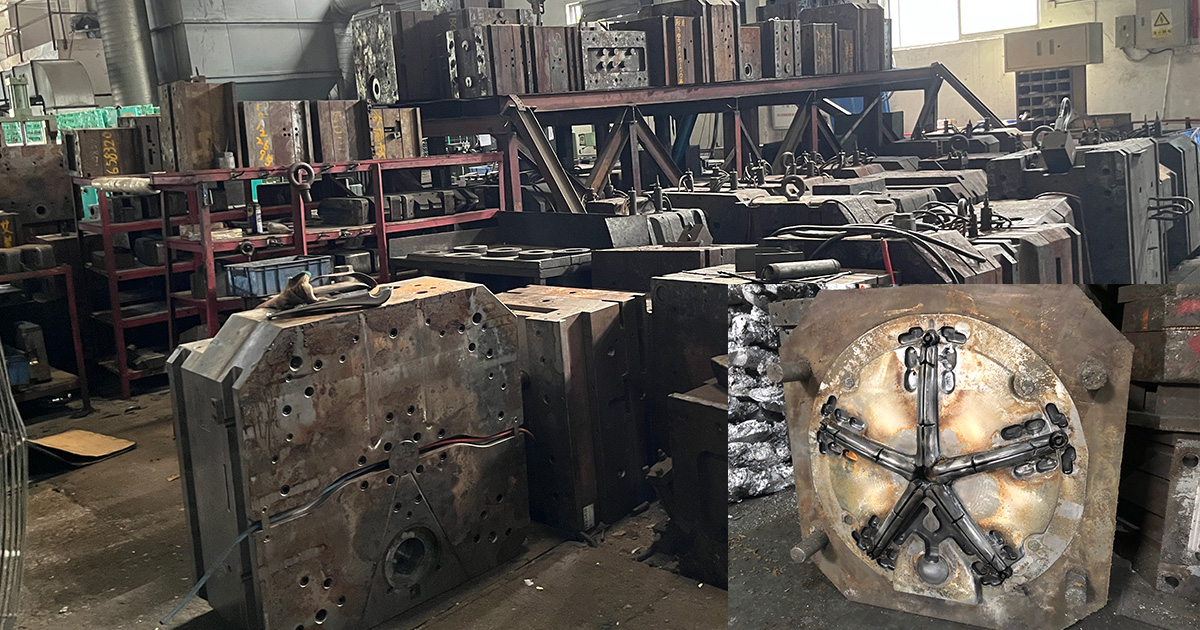
High-pressure die-casting (HPDC) at 800–1,200 bar eliminates internal air voids. Low-pressure and gravity-cast alternatives cannot. Request a cross-section inspection report or X-ray confirmation to verify internal density without destroying sample units.
Surface Treatment
Chrome, powder coat, and brushed finishes each carry different durability profiles. Salt-spray test hours (minimum 200h to ASTM B117) confirm corrosion resistance. This matters especially for coastal markets or high-humidity environments.
Aluminium vs. Reinforced Plastic: The Real Comparison
The aluminium-versus-plastic debate is usually framed as a cost question. It isn't. It's a fatigue question.
Aluminium alloy (ADC12) delivers tensile strength of 180–310 MPa. That allows thinner arm profiles without sacrificing rigidity — and supports load capacities well above BIFMA X5.1 minimums. Polypropylene composites can meet adequate static ratings. Under repeated dynamic cycling — thousands of weight shifts and lean-back motions per year — their fatigue performance degrades nonlinearly. For commercial environments with 24-month or longer warranty requirements, that distinction becomes a contractual liability.
Compatibility: Why a Mismatched Kit Costs More Than a Matched One
Buying a base in isolation is one of the most expensive sourcing decisions a chair manufacturer can make. The cost doesn't show up on the invoice. It shows up on the assembly line.
A gas cylinder shaft with even 0.3mm of bore mismatch against the base centre tube requires line-side shimming or force-fitting. At production volume, that adds 15–20 minutes of corrective labour per unit. It also concentrates stress at the base-cylinder junction — the same point where structural loads are highest.
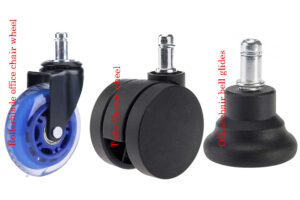
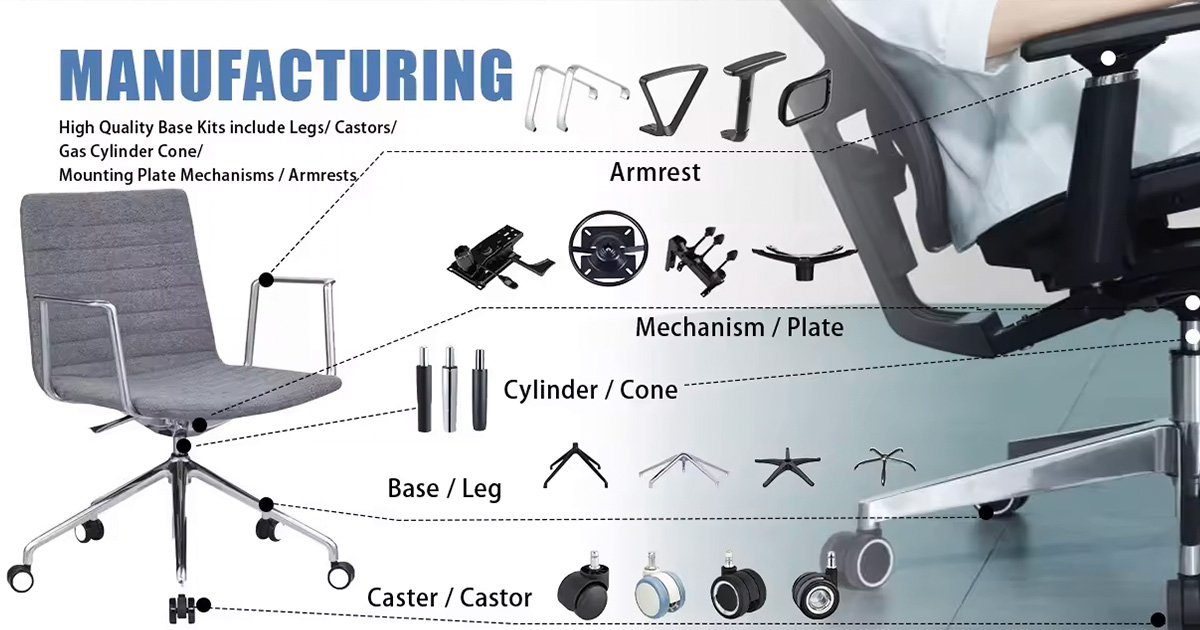
A properly specified aluminium chair base kit treats the base, gas lift, and caster set as one integrated system — not three separate line items. Specifying them together eliminates fitment risk and reduces assembly time from the first production run.
Standard Fitment Reference Table
| Component | Specification | Standard | Status |
|---|---|---|---|
| Base Diameter | 500mm – 830mm (5-star / 4-star) | BIFMA X5.1 / EN 1335 | Full Range |
| Gas Cylinder Bore | 28mm mounting diameter | Industry Standard | Matched |
| Caster Stem | 11mm standard socket | EN 12529 | Matched |
| Caster Wheel Size | 50mm / 60mm (PU or nylon) | EN 12529 / BIFMA | Matched |
| Dynamic Load Rating | Per BIFMA X5.1 cycle test | BIFMA X5.1 | Certified |
| Corrosion Resistance | 200h+ salt spray (chrome finish) | ASTM B117 | Tested |
Buyers sourcing for non-standard applications — heavy-duty, bariatric, or custom aesthetic programmes — should request modified tolerance documentation at RFQ stage.
Testing Validation
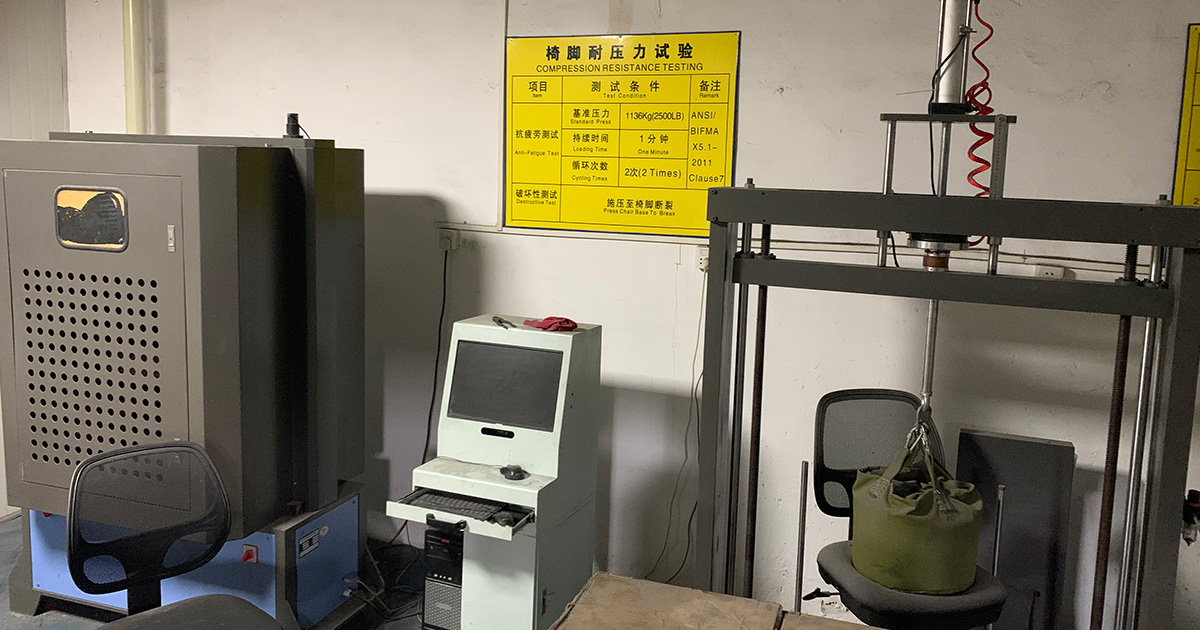
Tincci's aluminum chair base kits are validated against BIFMA X5.1 dynamic cycling protocols. Testing covers repeated load cycles that simulate real-world commercial use — evaluating structural integrity, surface retention, and joint stability across the base-to-cylinder interface.
TÜV and SGS verification is available on request for tender qualification or regulatory compliance. Treat certification documentation as a standard deliverable in your supplier qualification process — not an optional add-on.
What to Request Before You Place a Purchase Order
A supplier's catalogue and price list reveal nothing about production consistency. The following seven documents form the minimum qualification standard for any aluminium chair base kit supplier being evaluated for volume OEM supply.
- Material Certification — alloy grade and virgin material declaration (ADC12 or equivalent), with batch traceability
- Die-Casting Process Report — confirms casting pressure range, tooling maintenance cycle, and production rejection rate
- Surface Treatment Test Report — salt-spray hours, adhesion grade, and finish hardness (powder coat or chrome)
- BIFMA X5.1 Compliance Report — dynamic cycle test results for the specific base diameter being sourced
- Dimensional Inspection Report — centre bore tolerance, arm symmetry, and base-plate flatness
- Third-Party Certification — TÜV, SGS, or equivalent confirming test methodology independence
- Factory Audit Record — ISO 9001 quality management system or equivalent QC framework evidence
A supplier who cannot produce the first three documents within 48 hours of a qualification request is signalling one of two things: the testing has not been done, or documentation control is too weak to support volume OEM supply. Either is a clear signal.
What "Factory Direct" Actually Means
Sourcing aluminum chair base kits "factory direct" sounds straightforward. The meaningful question is not whether a supplier owns a factory. It is whether that supplier controls the sub-processes that determine component quality: alloy smelting, precision die-casting, surface treatment, and final inspection.
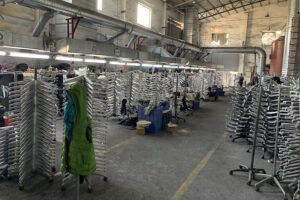
Tincci operates through seven deep-tier manufacturing partners covering the full production chain for chair base kits, gas cylinders, and caster sets. This structure controls specification at the raw material stage — not just at finished goods inspection. It also supports dimensional customisation across the full 500mm–830mm base diameter range without minimum order constraints at the prototype stage.
With this level of supply chain depth, you're not buying a finished component. You're buying production consistency across every batch.
Reviewing Your Chair Component Supply Chain?
If you are currently qualifying suppliers for an aluminium chair base kit programme — or benchmarking your existing supply chain against BIFMA and EN 1335 standards — two options get you started fastest.
Option 1: Download our Technical Compatibility Checklist for Aluminum Chair Base Kits — a one-page reference covering bore diameter, caster fitment, and surface treatment standards for OEM procurement teams.
Option 2: Send us your chair blueprint or current base specification. Our engineering team will provide a free structural compatibility review and flag any fitment or load-rating gaps in your existing component combination.