I. Introduction: The Illusion of the “All-in-One” Manufacturer
A dangerous myth plagues B2B furniture procurement: the belief that buying from a single, massive factory guarantees the lowest cost. In reality, this “single-source dependency” introduces hidden procurement costs, assembly bottlenecks, and severe quality fade.
When premium brands rely on a traditional factory to produce every part of a chair, they are paying for inefficiency. The most scalable and resilient solution is shifting from a generic vendor to a true B2B supply chain integrator.
II. The Physics of Seating: Why Material Disciplines Cannot Be Faked
It is mechanically impossible for one traditional factory to master every component. Modern commercial seating requires distinct, highly specialized engineering environments.
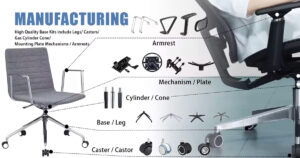
- Aluminum Alloy Die-Casting (AlSi12): Manufacturing a heavy-duty 5-star aluminum base requires specialized high-tonnage machinery. Utilizing premium materials like AlSi12 aluminum alloy ensures maximum structural integrity. A factory that specializes in plastics simply cannot execute commercial-grade metal die-casting without outsourcing to cheaper, unverified workshops.
- Plastic Injection Molding: Premium mobility requires precision. Manufacturing heavy-duty chair casters involves exact blends of Polyurethane (PU) and Polyamide (PA) plastics to protect hardwood floors and ensure silent running. This demands dedicated injection molding facilities.
- Pressurized Gas Engineering: Producing a safe, non-rotating chair cylinder or a heavy-duty Class 4 gas lift is a high-risk operation. It requires distinct safety certifications, strict temperature controls, and specialized testing equipment that standard furniture factories do not possess.
III. The Hidden Financial Drain: Tolerance Mismatches on the Assembly Line
When a buyer sources from a single factory that secretly outsources its weak points, dimensional mismatches inevitably occur on the factory floor, draining labor budgets.
- The Conical Connector Crisis: Poor machining leads to wobbly connections between the swivel base seat mechanism and the gas lift.
- Caster Socket Friction: Inconsistent 11mm caster sockets slow down bulk assembly lines and drastically increase factory rejection rates.
IV. Supply Chain Integrator vs. Traditional Trader: Knowing the Difference
A traditional trading company simply flips products. A true B2B supply chain integrator engineers the final outcome using a dedicated network of OEM facilities.
- The 7-Factory OEM Network: Partnering with an integrator that orchestrates a network of 7 specialized OEM factories offers a massive advantage. You extract boutique-level craftsmanship from dedicated facilities (e.g., one strictly for pneumatics, one strictly for die-casting) under one unified standard.
- Automotive-Grade QC (PPAP & 8D): Premium European and American buyers demand more than basic visual checks. Top integrators utilize advanced quality frameworks like the Production Part Approval Process (PPAP) and 8D problem-solving methodology. These automotive-grade standards eliminate quality fade—capabilities rarely found in a standard single factory.
V. The Logistics Multiplier: Vendor Consolidation and CBM Optimization
Choosing an integrated chair components supplier provides direct freight and administrative savings.
- Eliminating Multi-Vendor Chaos: You gain the administrative relief of communicating with one expert node rather than chasing five different factory representatives for bases, lifts, casters, and mechanisms.
- Optimizing Freight (CBM): An integrator pre-assembles and strategically packs matching components (e.g., nesting 5-star bases with heavy-duty casters and cylinders) to maximize container space and drastically reduce shipping costs.
VI. Mitigating Aftermarket Liability: BIFMA and SGS Compliance
Relying on a single factory’s unverified components puts your brand equity at risk.
- Component-Level Certification: Your base and mechanism must independently pass ANSI/BIFMA X5.1 drop and cycle tests. Furthermore, your gas lift must comply with strict TUV LGA DIN 4550 standards.
- The Integrator’s Guarantee: A supply chain integrator acts as the ultimate firewall, holding each specialized facility accountable to SGS testing standards before components ever reach the shipping container.
VII. Conclusion: Upgrading Your Supply Chain Architecture
Vendor consolidation is the fastest route to protecting your margins. The financial ROI of abandoning the risky single-factory model is immediate: lower labor costs, optimized freight, and zero aftermarket complaints.
Stop paying for manufacturing inefficiencies. Upgrade your supply chain architecture by partnering with an expert OEM network. Explore premium, BIFMA-certified seating solutions at Tincci and secure your competitive advantage today.