Comparing a swivel base vs legs for commercial seating? Read our manufacturing guide to navigate BIFMA standards, logistics costs, and design applications.
When a new commercial chair is born on the drafting table, designers often focus heavily on the ergonomics and aesthetics of the seat shell. However, procurement managers and engineers know the truth: the bottom half of the chair dictates the product’s ultimate success.
The choice between a swivel base vs legs is never just about looks. It directly impacts your supply chain complexity, BIFMA testing pass rates, and the ocean freight costs that will ultimately determine your profit margin.
If your R&D team is currently debating the structural foundation of your next seating line, this manufacturing guide will break down the functional, testing, and logistical realities of both options.
1. The Case for the Swivel Base: Dynamic Environments
A swivel base is designed for active, task-oriented environments. By allowing users to rotate $360^\circ$ and adjust their seat height, it promotes dynamic collaboration and reduces physical strain.
Best Applications:
Executive offices and workstations.
High-end corporate boardrooms and conference centers.
Modern lounge areas that require interactive seating.
The Sourcing Reality:
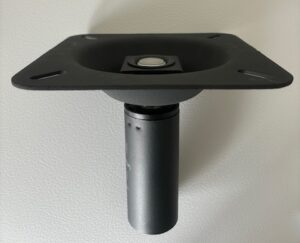
When you specify a swivel base, you are not buying a single part; you are engineering a system. A successful swivel foundation requires the flawless integration of a seat mechanism, a gas cylinder, and a 4-star or 5-star base. The Morse taper fit between the gas lift and the base must have zero-tolerance precision.
Trend Spotlight: For premium boardroom seating, upgrading to an auto return swivel mechanism paired with a polished 4-star aluminum base is a highly effective way to command a premium price point while keeping the room looking organized.
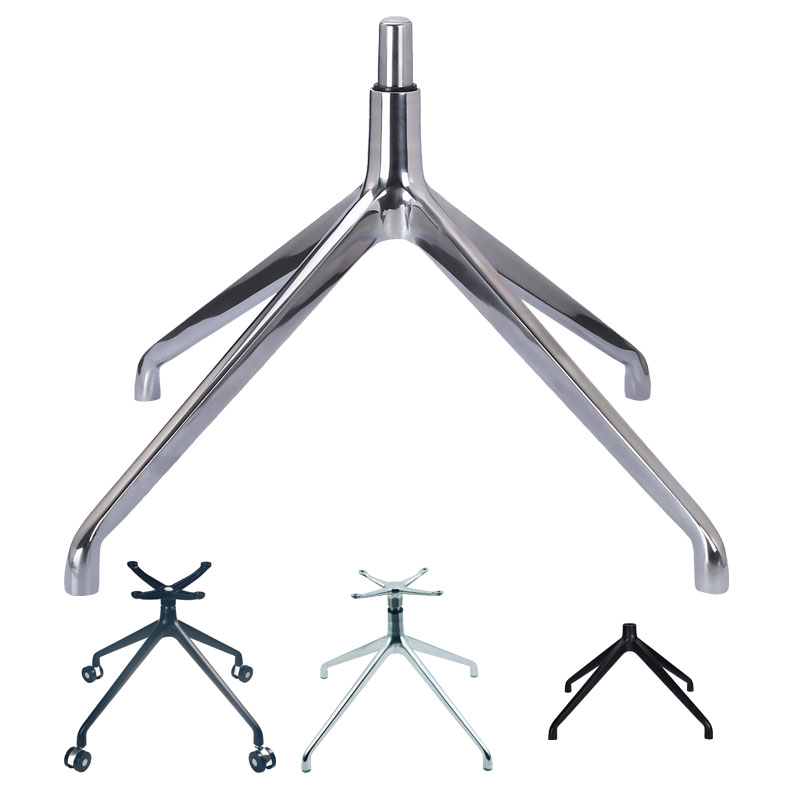
Premium aluminum 4 leg swivel chair base designed for modern office and upholstered chairs
2. The Case for Fixed Legs: Stability and Minimalist Lines
Fixed legs provide absolute stability and a clean, uninterrupted visual silhouette. They convey a sense of permanence and architectural grounding that moving chairs simply cannot achieve.
From a procurement standpoint, fixed legs—whether fabricated from tubular steel, die-cast aluminum, or wood—are structurally simpler. They eliminate the need for complex mechanical parts like tilting mechanisms and gas lifts. However, this simplicity means the manufacturing quality (specifically the strength of the joints and welds) is entirely exposed.
3. BIFMA Testing: How the Standards Differ
Whether you are targeting the European market or high-end buyers in South America, your seating must meet strict safety standards. The BIFMA X5.1 protocols treat these two bases very differently:
Testing the Swivel Base: BIFMA focuses heavily on dynamic fatigue. The swivel base must survive rigorous base crush tests (withstanding up to 2,500 lbs of static weight), rotation cyclic tests, and caster durability evaluations over rough surfaces. The center bore’s resistance to stretching is critical here.
Testing Fixed Legs: The testing shifts to lateral stability. The protocols heavily emphasize the Front and Rear Leg Strength Tests, applying massive push and pull forces to the chair to ensure it won’t tip over or buckle. The shear strength of the welds and the mounting brackets is the ultimate deciding factor.
4. Logistics & Assembly Line Impact (The Profit Killer)
This is the phase where many well-designed chairs lose their profitability.
The Swivel Base (KD Advantage): The components of a swivel chair (the base, cylinder, mechanism, and casters) can be packed completely Knock-Down (KD). This incredibly efficient use of packaging space allows you to maximize the number of units you can load into a 40HQ container, drastically reducing the landed cost per chair.
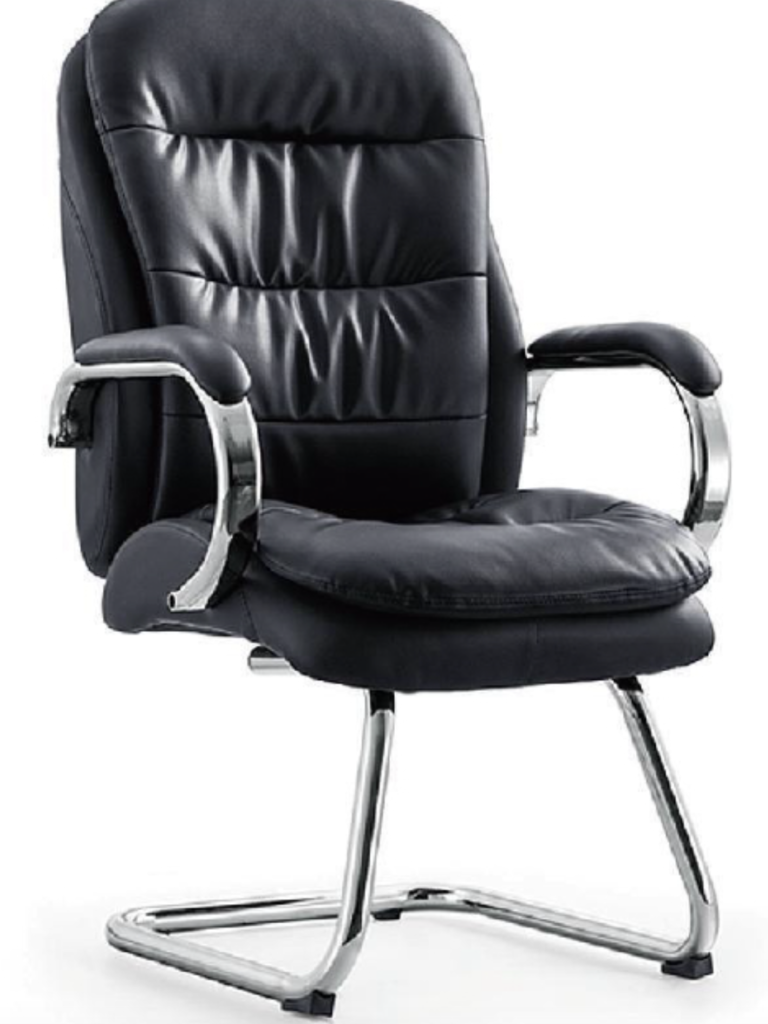
Fixed Legs (The Volume Trap): A fully welded, 4-leg static frame takes up a massive amount of cubic meters (CBM) in a shipping box because it ships mostly empty air. Unless your engineering team can design a robust KD leg system that still passes BIFMA push-tests, ocean freight costs can easily erode your profit margins.
🛑 Stop Guessing on Structural Costs
The debate of swivel base vs legs has no universal winner. The right choice depends entirely on your target environment and your packaging budget.
Before you finalize your blueprints and lock in your manufacturing costs, let our engineering team review your project. As a specialized B2B supply chain partner for commercial seating components, Tincci ensures your hardware not only looks great but passes every standard.
📧 Send your CAD drawings or design sketches to [supplier@tincci.com]. We will provide a Free Structural Review & Cost Analysis, helping you determine the most profitable and reliable base solution for your next container order.
Nylon vs Aluminum Chair Base Strength: A BIFMA Testing Guide for Manufacturers When engineering a new line of commercial seating, selecting the right base material
Success Story: Escaping the Price War with the Auto Return Swivel Mechanism Client Profile: A mid-to-high-end commercial furniture brand based in Europe. Market Segment: Office
Swivel Base Seat Mechanism Buying Guide: A Sourcing Manual for Chair Manufacturers Sourcing hardware for commercial seating looks deceptively simple on paper. However, procurement managers
Searching for computer chair parts suppliers online is easy. Finding one that won’t disrupt your assembly line or ruin your brand’s reputation is the real